






Exodus from Pakistan: Why are thousands risking everything to escape?
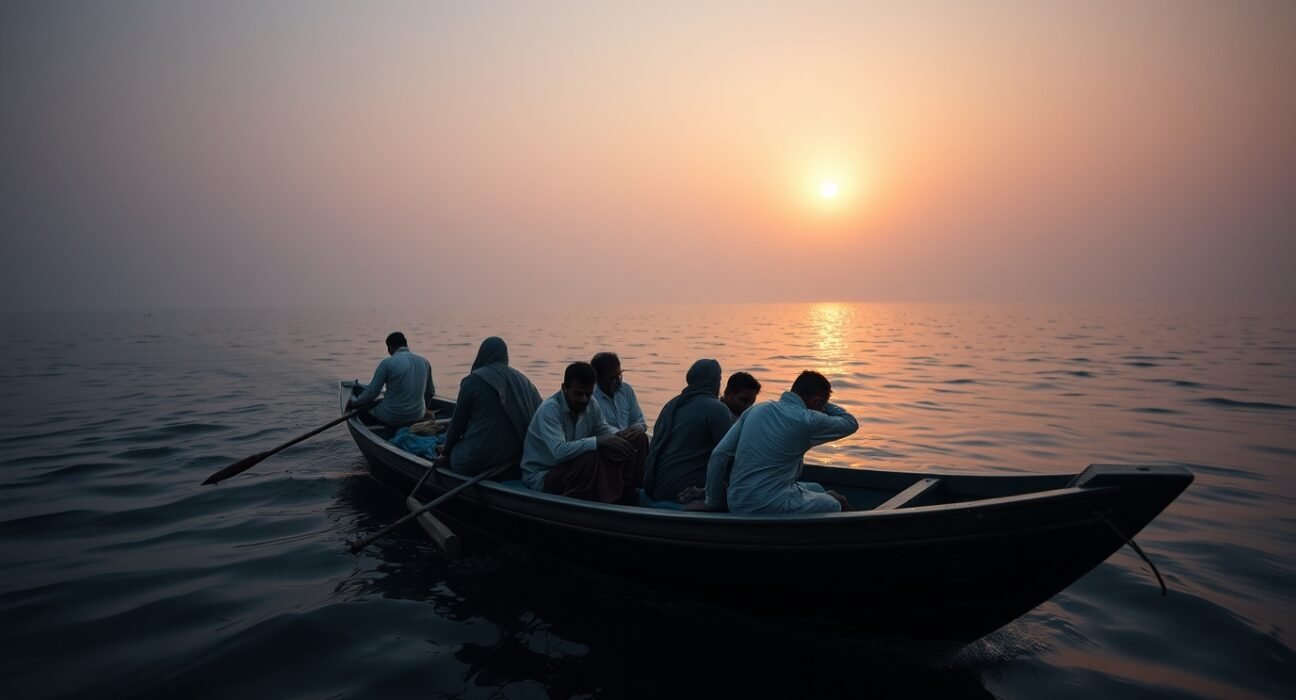
The merciless ocean took another 50 lives close to Spain’s Canary Islands on January 2, 2025, along with 44 undocumented Pakistani migrants. These hopeful individuals attempted to flee against the odds of poverty, unemployment, and hopelessness, but were instead met with the unrelenting frigid waters.
Such events transcend humanitarian tragedies by pointing toward an unequivocally dismal nation. For thousands of Pakistanis who try to flee Pakistan, surviving the arduous journey only leads to further challenges of deportation, detention, or something far worse.
Increase in Deportations
The figures of Pakistani deportees is astonishing: 220 Pakistanis were forcibly sent back from the US, China, Turkey, Zimbabwe, and Senegal in January alone. Many detainees, such as the 12 detained at Karachi’s Jinnah International Airport, are subjected to immediate arrest when returning home.
Saudi Arabia has recently upped entry restrictions for Pakistanis, leading to the deportation of 47 over visa misuse and illegal employment within a mere two days. Other nations, Thailand for instance, have decided to implement their own regulations on created documents by blacklisting individuals for life.
These events of deportation are part of a greater mass departure from Pakistan due to woeful reasons, which leads them to being detained, or tragically lost to the sea.
What Makes Pakistanis Leave Their Home Country?
The lack of a promising future is what keeps people from moving back home.
The country is on the verge of economic collapse with an astonishing 4.5 million people unemployed and youth unemployment reaching 11.1 percent. The labor market is continuously collapsing, and even GCC countries, which were once welcoming to Pakistani workers, are starting to tighten their borders.
According to Overseas Employment statistics, 58 percent of the 727,381 Pakistani workers who withdrew in 2024 were unskilled or low-skilled, and the international market is no longer in need of such workers. Because of this, Pakistani workers overseas have become more vulnerable to exploitation and unemployment.
Pakistan’s brain drain challenge has become more critical than before. From an already shocking figure of 225,000 in 2021, emigration skyrocketed to 13.53 million in 2024. The most astonishing part of the data gathered by the Pakistan Institute of Development Economics PIDE is that 37 percent of Pakistanis hope to leave the country, especially educated young men and women.
A country striving towards deportation rather than solving its innate challenges.
Instead of solving the issue staring them right in the face, the government’s attempt to shift focus involves getting rid of Afghan refugees. There has been a deportation of over 527,000 Afghans since September 2023 under the Non-Permitted Alien Deportation Strategy which was heavily condemned as a breach of human rights by Amnesty International.
The irony, however, is glaring: Pakistanis are currently fleeing their homeland in record shumber, yet the government is brutally removing entire families who have resided in Pakistan for decades.
Waging War Against Human Smuggling: No Real Solutions Yet
While the claim is that human trafficking is being dealt with, the reality of the situation remains gruesome. In the past year:
1,638 arrests
458 convictions of traffickers
65 Corrupt officials of the FIA were blacklisted in relation to the 2024 Greece boat tragedy paral elongs.
No real solution means illegal migration shall ever increase and so will tragedies like the canary islands disaster because we have yet to deal with the causes.
The Long Delayed Exodus
With Climate change comes increased migration making things worse. Floods and droughts expected by 2050 could easily lead to 2 million climate refugees in Pakistan.
The Pakistani government should have used the tragic drowning of 44 Pakistanis in the Canary Islands as a wake up call. But alas, the government continues to ignore mass unemployment, climate induced displacement, and economic devastation while focusing on result oriented crackdowns.
This is more than simply a case of migration – it is an urgent crises.
As long as Pakistan refuses to take blame for the pain it inflicts on its diaspora, it shall continue to be unsuccessful in churning the tide of tragedy.