

City in grip of water crisis for 17 years
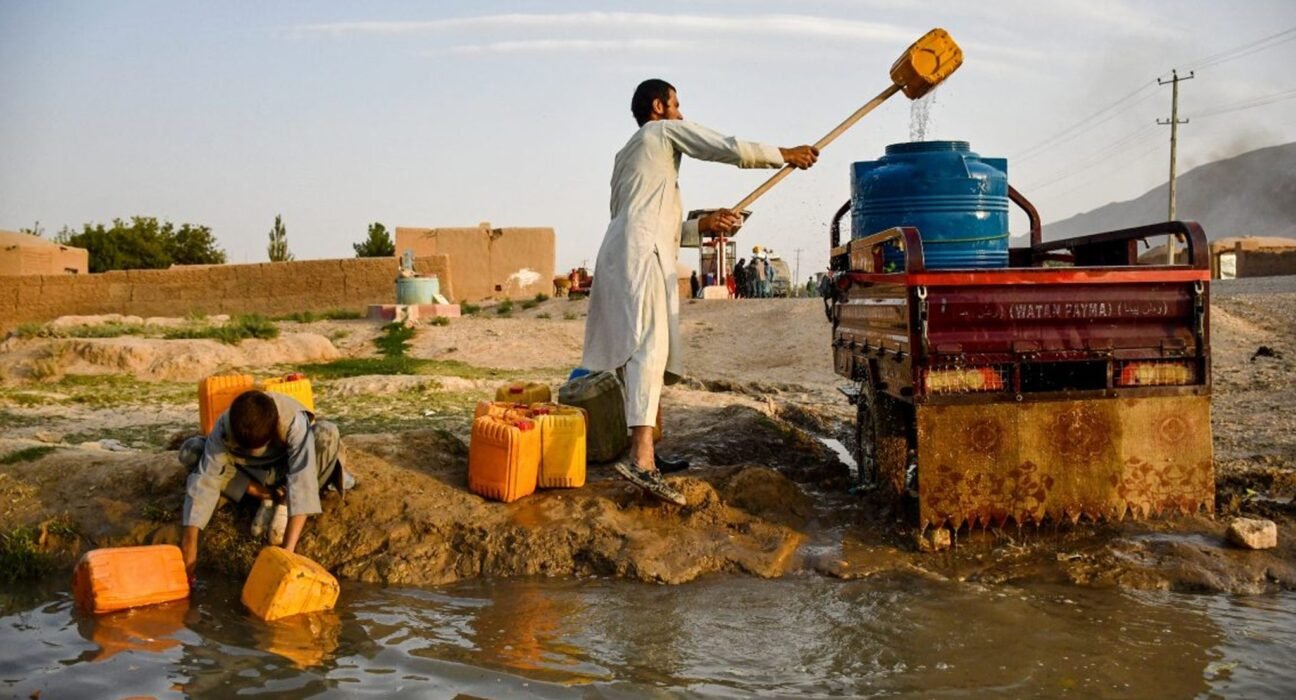
For seventeen years Karachi faced its most serious water emergency since 2003 because the Sindh government under PPP failed to bring Indus river water into the city during its entire rule period. The crisis has lasted for many years while millions of people continue to battle broken pipelines that waste precious water and a profit-focused mafia exploits the situation with tanker deliveries.
Major Pipeline Failures Intensify Crisis
The Express Tribune surveyed seven major pipeline failures of Karachi Water and Sewerage Corporation (KWSC) installations that caused water loss reaching millions of gallons since December 2024.
On April 29 an 84-inch diameter pipeline within the University of Karachi experienced failure which caused widespread flooding of Campu The flooding caused educational activities to stop because both campus routes and instructional departments became under water. The flooding spread across the university which caused harm to multiple pieces of equipment together with valuable property.
Repair operations at the KWSC installation started on Tuesday according to their spokesperson and the work was projected to need three days for completion.
Tanker Mafia Profit Amid Negligence
Water supply shortages throughout the city lead to financial gain for the tanker mafia even though critics view this situation as stemming from “criminal negligence” by KWSC’s corrupt officials. The survey indicates that the tanker mafia generates billions of rupees from disruptions of pipelines and abandoned institutional oversight.
KWSC People’s Labour Union General Secretary Mohsin Raza has identified KWSC officials as the main cause of pipeline bursts that occur often on religious and national holidays thereby requiring citizens to purchase expensive water tankers.
Raza noted the extensive pipeline failure problem affecting water infrastructure persists due to lack of investigation despite receiving $1.6 billion in restructuring funds.
A Series of Costly Incidents
Raza cited several recent disruptions:
In December 2024 the 84-inch line burst from Red Line BRT construction and disrupted water supply for 17 days thereby allowing tankers to capitalize on extra profits.
A burst in the 72-inch pipeline occurred due to electrical failure at Dhabeji which disrupted water service across the area for two whole days in January 2025.
In February 2025 the company performed four-day repairs on three bulk lines.
All water supply from Hub Pumping Station temporarily ceased on March 10, 2025 because of an electrical blackout which deprived 70 million gallons of water to the affected districts.
The power disruption at Pipri Pumping Station cut off water supply for one full day on April 4th 2025.
The second 84-inch line burst during April 9, 2025 required three days for technicians to fix it.
Tanker operators strengthened their daily water supply operations from 30–40 million gallons into elevated levels during these emergency periods. The seven KWSC-supervised hydrants monitor regular operations of 40,000–50,000 tanker fleets.
Calls for Accountability
Raza requested an investigation from Chief Minister Murad Ali Shah about KWSC irregularities because he believed this negligence allowed tanker mafia money-making schemes while hurting PPP public image.
Dr. Maroof Bin Rauf the secretary of Karachi University Teachers Society requested the chief minister to enact strict measures against KWSC management due to the campus flooding.
The city of Karachi faces increasing water problems because of old infrastructure combined with reported corruption and water tanker price manipulation that drive widespread public discontent.